
Most people who fail the real-estate exam don't fail because it's hard — they fail because they studied passively (rereading a course textbook) instead of actively (answering questions and fixing weaknesses). Here's the system that works.
1. Learn the outline, not the textbook
The exam has two parts: a national portion — property ownership, agency, valuation, financing, contracts, disclosures, practice, math, leasing, fair housing — and your state's license-law portion. Study BY TOPIC, and finish every topic with a question set on it, not just reading.
2. Drill your weak areas, not your comfort zone
Track accuracy per category. Most candidates are weakest in real-estate math and state license law — exactly the two areas the exam punishes. If your practice tool doesn't show per-category accuracy, keep a tally yourself.

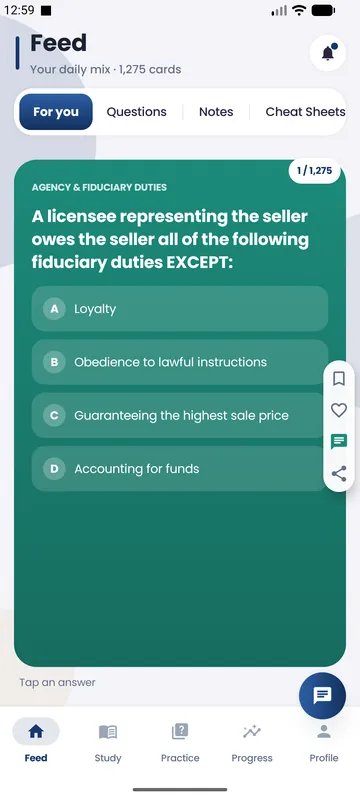
3. Take full-length mock exams under exam conditions
At least two 100-question timed mocks before exam day, with no answer reveals until the end. The goal isn't the score — it's stamina, pacing (about 35–45 seconds per question), and a list of misses to review.
4. The final week
Re-drill every missed question, re-read your state's license-law material, and do one last mock two days out. Sleep beats cramming the night before.